Inclusions
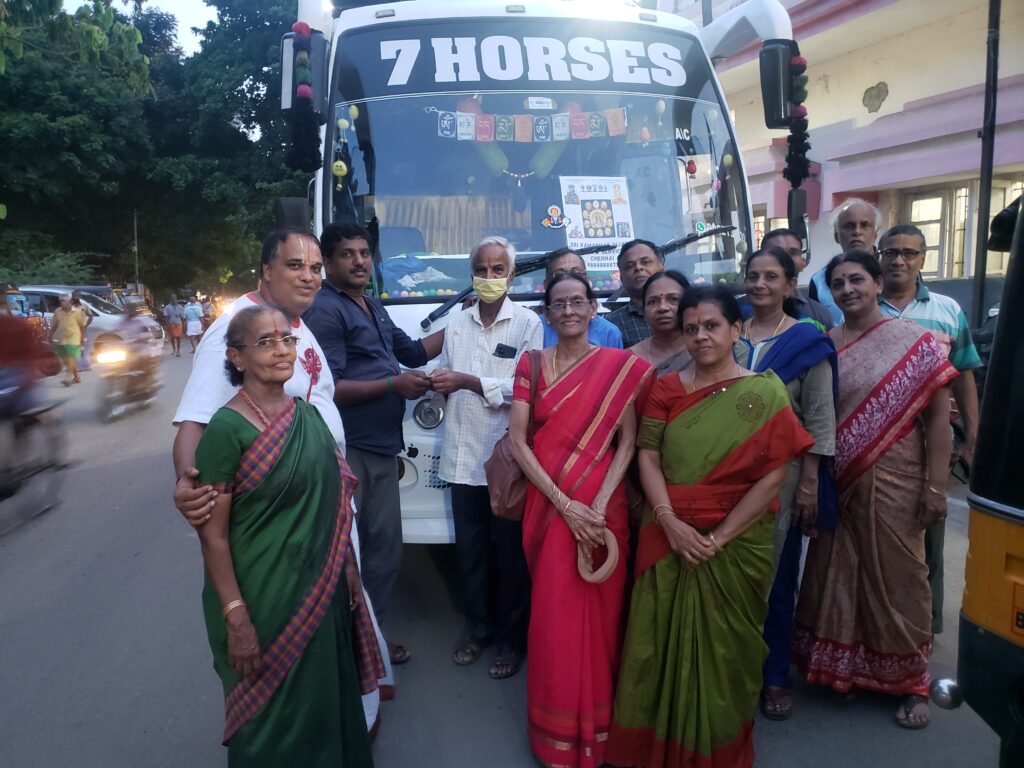
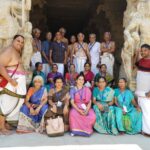
Stay arrangements, local travel support, temple darshan assistance, spiritual sessions, and continuous on-ground coordination during the yatra.


Muktinath is one of the 108 Divya Desams, the sacred Moksha Kshetram in the Himalayas where Lord Sri Mukti Narayana grants liberation and divine grace.
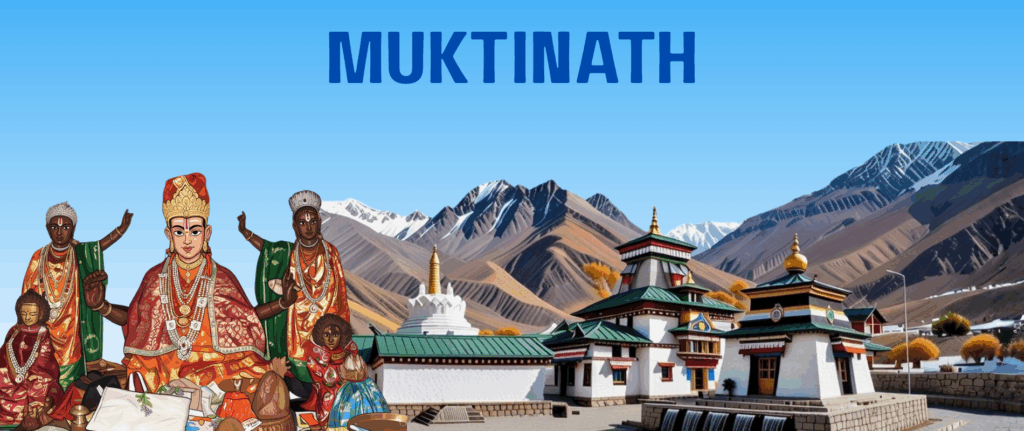
“Salakiramam Adai Nenje,” sings Thirumangai Azhwar.
Mukthinath, a sacred Salagrama Kshetram, rests quietly in a valley, surrounded by the vast yet serene Himalayas.
During the time before Sangam period and long after (Ancient Tamizh Literature Period), reaching this kshetram was considered equal to attaining Vaikuntha itself. In those days, an ordinary person could reach Mukthinath only by walking. The journey itself was a test of faith.
Reaching Mukthinath: A Pilgrimage Beyond Imagination (FUN) :
Even today, despite all modern comforts, the path remains demanding. But the award for going on this Yatra is not only Bhagavan’s grace but he grants a chance for us to enjoy the delights of his Srushti. From breathtaking views of snowcapped mountains to windy paths, the journey is all about beauty. One must first travel to Kathmandu, then to Pokhara, continue onward to the small Himalayan village of Jomsom, and from there take a jeep over rocky, unpredictable Himalayan roads to finally reach this sacred abode.
What once demanded only feet and faith, today still demands sheer determination.
The Sthalapuranam of this kshetram states that River Gandaki performed penance to Bhagavan, seeking Him as her child. Granting her wish, the Lord manifested himself as Salagramas, found in the riverbed of the Gandaki.
The Process of Manifestation:
Salagramas are formed when old trees and leaves fall into the river and, over long periods of time, are compressed beneath layers of eroded soil. These layers harden, and insects carve natural patterns upon them—thus giving form of the sacred Salagrama.
Andal sings “Povan Pogindrarai” in the Thiruppavai, reminding us that the journey itself is joyful, even if the darshan lasts only for a short period of time.
Never Miss the Architecture:
The temple portrays Tibetan-style architecture, featuring 108 Gomukhas, from which the icy waters of the Gandaki gush forth.
The Vaikuntha from which return is certain!!!:
In essence, a visit to Mukthinath grants one the experience of Vaikuntha itself—yet allows him to return.
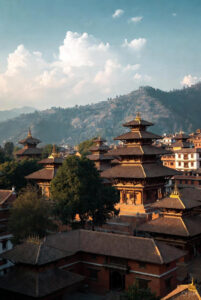
The sacred starting point of the Nepal Yatra, serving as the gateway to Vaishnava, Shaiva, and Ramayana kshetrams.
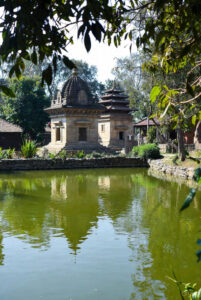
A sacred Vaishnava shrine where Lord Vishnu rests in Ananta Sayana, symbolizing cosmic balance and divine preservation.
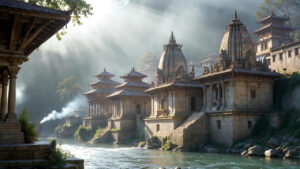
One of the holiest Shaiva kshetrams, where Lord Shiva is worshipped as Pasupathi, the supreme protector of all life.
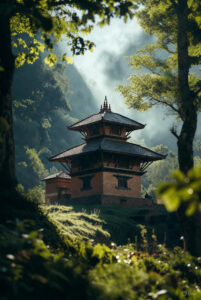
An ancient and revered Vishnu temple, celebrated as one of Nepal’s oldest Vaishnava kshetrams with timeless spiritual heritage.
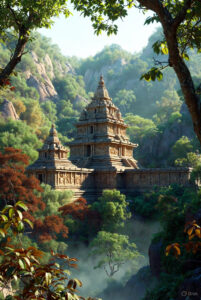
The divine birthplace of Mother Sita, marking the sacred site of the celestial wedding of Sri Rama and Sita Devi.
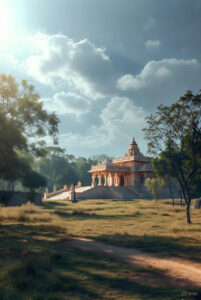
A revered Ramayana kshetram where Lord Rama broke Lord Shiva’s divine bow during Sita Devi’s swayamvaram.
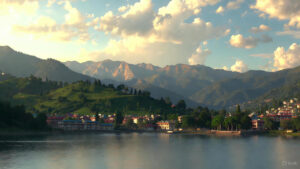
A serene Himalayan town where natural beauty and spiritual tranquility come together in divine harmony.
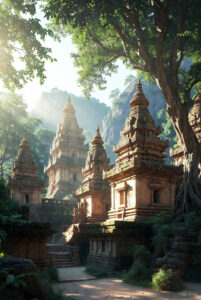
A sacred cave temple dedicated to Lord Shiva, worshipped in a naturally formed lingam within a mystical setting.
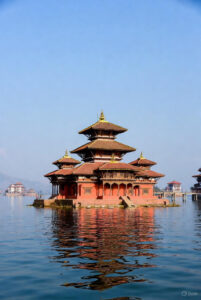
A powerful island shrine in Phewa Lake, revered for protection, strength, and divine blessings.

A calm and reflective spiritual experience amidst pristine waters and the peaceful Himalayan backdrop.
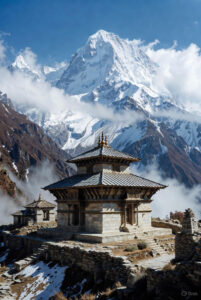
A supreme Moksha Kshetram and Divya Desam where Lord Sri Mukti Narayana grants liberation and eternal grace.
Stay arrangements, local travel support, temple darshan assistance, spiritual sessions, and continuous on-ground coordination during the yatra.
Personal spending, special rituals or offerings, extra refreshments, and any services not clearly listed under inclusions.
Devotees of the Ramayana, Sri Vaishnava followers, families seeking spiritual travel, senior pilgrims, and participants of bhagavatha satsang groups.
Light cotton attire, comfortable footwear for walking, regular medicines, a small diary for notes, drinking water bottle, and a simple shawl for temple entry.